




Categories
December 11, 2025
Online Safety Essentials
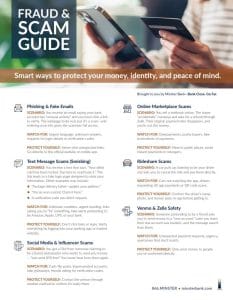
Fraud targeting people under the age of 25 continues to rise as scammers become more sophisticated. High school students and young adults are especially vulnerable due to increased digital activity, social media use, and frequent reliance on payment apps and public Wi-Fi. This article provides an in-depth overview of the most common scams affecting this age demographic along with real scenarios and protection steps.
1. Phishing Emails trick students into sharing personal information.
Scenario: An email that looks like it came from your school or bank says you must verify your identity to process a refund.
Why it works: Students receive many official-looking emails.
Red flags: Misspellings, unfamiliar senders, urgent language.
Protection: Never click links in suspicious emails. Use official websites instead.
2. Text Message Scams (Smishing) scams arrive through texts posing as trusted institutions.
Scenario: A text claims your debit card is locked and provides a link to fix it.
Why it works: Students respond quickly to texts.
Red flags: Unexpected verification codes, prize offers, fake delivery updates.
Protection: Never click links in texts. Verify through official apps or typed URLs.
3. Social Media Scammers use TikTok, Snapchat, and Discord.
Scenario: A hacked friend’s account asks you to send money for a giveaway.
Why it works: Social platforms feel trustworthy.
Red flags: Cash flipping claims, fake brand deals, impersonation.
Protection: Confirm suspicious messages directly with the person.
4. Online Marketplace Scammers target students buying and selling items.
Scenario: A buyer overpays and asks for a refund through a payment app.
Why it works: Students seek good deals.
Red flags: Pressure to act fast, refusal to meet, fake screenshots.
Protection: Meet in public places and avoid sending money to strangers.
5. Rideshare Scammers impersonate real rideshare drivers.
Scenario: A driver tells you to cancel in the app and pay cash.
Red flags: Mismatched vehicle details, QR codes, off-app payment requests.
Protection: Check the app for correct driver details before entering.
6. Payment App Scams (Zelle and Venmo) utilize convenience to cause irreversible damage to your bank account.
Scenario: A scammer pretends to be your roommate and asks for urgent money.
Red flags: Urgent messages, new accounts, unexpected requests.
Protection: Confirm with the person through another method before sending money.
7. Re-shipping Scams lure students into fake jobs involving package handling.
Scenario: You are paid to reship packages that turn out to be stolen.
Protection: No legitimate job requires shipping from your home.
8. PayPal Scammers create fake emails pretending to be PayPal.
Scenario: An email says you made a large payment and prompts you to dispute it.
Protection: Only log in through the official PayPal app or typed website address.
9. Roommate and Rental Scams target students searching for housing.
Scenario: A landlord requests a deposit before you see the unit.
Red flags: Too-good-to-be-true prices, landlords who cannot meet.
Protection: Verify ownership and never pay before viewing.
10. Behavior Blackmail (Sextortion) is a growing threat targeting students.
Scenario: Someone pressures you into sending private photos then threatens to share them.
Protection: Stop communication, save evidence, and report immediately.
11. Amazon Impersonation Scams use texts, emails, and calls to lure you in.
Scenario: A message claims suspicious activity and asks you to verify your payment details.
Red flags: Requests for gift cards or remote access.
Protection: Trust only notifications from the Amazon app.
12. Fake Apple Pay Scams occur when buying or selling items online.
Scenario: A buyer sends a fake Apple Pay screenshot and asks for a refund.
Protection: If a payment is not in your Wallet app, it is not real.
13. Identity Theft often begins with public Wi-Fi or data breaches.
Scenario: Logging into accounts on public Wi-Fi leads to unauthorized credit accounts.
Protection: Use credit monitoring tools, secure networks, and shred sensitive documents.
14. Scholarship, Internship, and Job Scams target students searching for income.
Scenario: A recruiter offers high pay but requires you to buy training materials.
Protection: Research employers and avoid upfront fees.
15. Student Loan and Financial Aid Scams exploit confusion around loans.
Scenario: Someone promises guaranteed loan forgiveness for a fee.
Protection: FAFSA is free and legitimate programs do not require payments.
The more you understand how scams work, the easier it becomes to avoid them. With strong habits, a little awareness, and the right tools, you can stay focused on what matters most at school, at work, and in life. Minster Bank is committed to helping you protect your financial well-being every step of the way. Visit our Security page for more information.
See how you can set up Account Alerts on your Minster Bank account.
Stay Connected


Download App





©2026 Minster Bank


Online Banking Login
